
-
Yellow Sapphire (Pukhraj) - 3.33 Carats
Regular price Rs. 6,818Regular priceUnit price perRs. 7,545.00Sale price Rs. 6,818 Save 9%Sale -
Yellow Sapphire (Pukhraj) - 3.96 Carats
Regular price Rs. 7,091Regular priceUnit price perRs. 7,818.00Sale price Rs. 7,091 Save 9%Sale -
Yellow Sapphire (Pukhraj) - 4.94 Carats
Regular price Rs. 7,182Regular priceUnit price perRs. 7,999.00Sale price Rs. 7,182 Save 10%Sale -
Yellow Sapphire (Pukhraj) - 3.92 Carats
Regular price Rs. 7,546Regular priceUnit price perRs. 8,363.00Sale price Rs. 7,546 Save 9%Sale -
Yellow Sapphire (Pukhraj) - 3.79 Carats
Regular price Rs. 7,818Regular priceUnit price perRs. 8,636.00Sale price Rs. 7,818 Save 9%Sale -
Yellow Sapphire (Pukhraj) - 3.48 Carats
Regular price Rs. 8,091Regular priceUnit price perRs. 8,999.00Sale price Rs. 8,091 Save 10%Sale -
Yellow Sapphire (Pukhraj) - 4.22 Carats
Regular price Rs. 8,091Regular priceUnit price perRs. 8,999.00Sale price Rs. 8,091 Save 10%Sale -
Yellow Sapphire (Pukhraj) - 3.19 Carats
Regular price Rs. 8,727Regular priceUnit price perRs. 9,636.00Sale price Rs. 8,727 Save 9%Sale -
Yellow Sapphire (Pukhraj) - 3.49 Carats
Regular price Rs. 9,091Regular priceUnit price perRs. 10,090.00Sale price Rs. 9,091 Save 9%Sale -
Yellow Sapphire (Pukhraj) - 3.88 Carats
Regular price Rs. 9,091Regular priceUnit price perRs. 9,999.00Sale price Rs. 9,091 Save 9%Sale -
Yellow Sapphire (Pukhraj) - 9.44 Carats
Regular price Rs. 9,091Regular priceUnit price perRs. 9,999.00Sale price Rs. 9,091 Save 9%Sale -
Yellow Sapphire (Pukhraj) - 1.46 Carats
Regular price Rs. 9,182Regular priceUnit price perRs. 10,181.00Sale price Rs. 9,182 Save 9%Sale -
Yellow Sapphire (Pukhraj) - 7.75 Carats
Regular price Rs. 9,818Regular priceUnit price perRs. 10,817.00Sale price Rs. 9,818 Save 9%Sale -
Yellow Sapphire (Pukhraj) - 4.30 Carats
Regular price Rs. 10,000Regular priceUnit price perRs. 11,090.00Sale price Rs. 10,000 Save 9%Sale -
Yellow Sapphire (Pukhraj) - 7.98 Carats
Regular price Rs. 10,091Regular priceUnit price perRs. 11,181.00Sale price Rs. 10,091 Save 9%Sale -
Yellow Sapphire (Pukhraj) - 7.99 Carats
Regular price Rs. 10,091Regular priceUnit price perRs. 11,181.00Sale price Rs. 10,091 Save 9%Sale


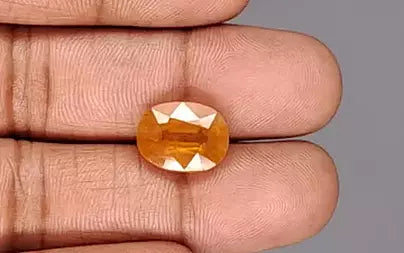

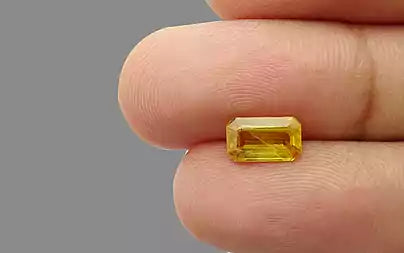
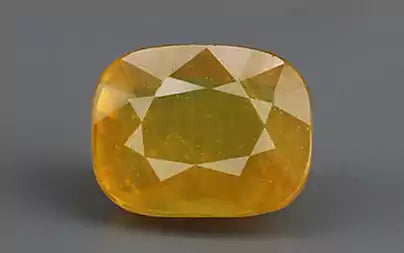
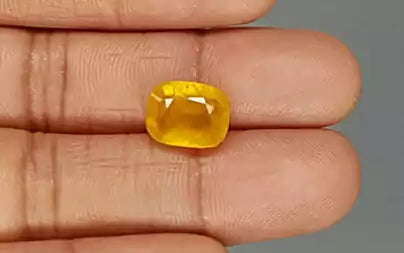


What Is Yellow Sapphire (Pukhraj)?
Yellow sapphire is the yellow variety of corundum, the same mineral as blue sapphire (neelam) and ruby (manik). In India it is sold as pukhraj stone or pukhraj ratna, and in villages and older markets you will still hear pokhraj or pushkaraj. Its colour runs from pale lemon to deep golden yellow. Most buyers look for a clear, bright canary yellow without green or brown in it.
Other Names of Yellow Sapphire Gemstone
Name changes from one region to the next, which is why same stone turns up under half a dozen searches. In Tamil and Malayalam it is pushparagam. Telugu and Kannada buyers often say kanakapushyaragam. Sanskrit texts call it peetamani, meaning yellow gem, and astrologers use Guru ratna because of its tie to Jupiter. A customer asking for any of these wants the same stone you see on this page.
Yellow Sapphire Mineral Family, Hardness and Colour
Corundum is aluminium oxide (Al2O3). Pure corundum has no colour at all. Traces of iron inside crystal give pukhraj its yellow, and the more iron, the deeper the shade tends to be.
At 9 on the Mohs scale, sapphire is the hardest natural gem after diamond. That hardness is what makes pukhraj practical in a ring worn every day. A gem lab confirms it by its refractive index (about 1.762 to 1.770) and its specific gravity (close to 4.00), and those two numbers alone separate it from citrine and yellow topaz, which look similar to the eye.
Yellow Sapphire in Vedic and Western Astrology
Connection to Jupiter (Brihaspati or Guru)
In Vedic astrology pukhraj belongs to Jupiter, known as Brihaspati or Guru, the teacher of the gods. Jupiter is linked with knowledge, children, marriage, wealth and dharma. Astrologers suggest stone when Jupiter is weak or badly placed in a birth chart, or when it rules a helpful house for the person's ascendant and they want to strengthen it.
Among the navaratna, the nine planetary gems, pukhraj is one of the most widely worn. It is also one of the gems astrologers are careful with, since a strong Jupiter stone in the wrong chart is believed to cause as much trouble as it solves.
Vedic and Western Astrology Compared
Two traditions use the stone very differently. Vedic astrology prescribes pukhraj to a person, after reading their chart, and cares about weight, metal, finger and the day it is first worn. Western astrology mostly treats gems as birthstones. Sapphire, in all its colours, is the modern birthstone for September, and yellow gems in general are linked with Sagittarius, the sign Jupiter rules. No chart reading is involved in the Western view, and there is no rule about minimum weight.
If you are buying pukhraj for astrological reasons, the Vedic rules on this page are the ones that apply.
Yellow Sapphire Stone Benefits
These benefits are based on Vedic astrology and traditional beliefs. They are beliefs, and science has not tested them. No gemstone should replace medical, legal or financial advice.
Wealth, career and business growth
Most common reason people buy pukhraj is money. Jupiter is the planet of expansion in Vedic astrology, and traders, business owners and people waiting on a promotion often wear it in the belief that it brings steady growth and better luck with opportunities. Astrologers tend to recommend it when Jupiter rules the 2nd, 9th or 11th house in a chart, the houses tied to savings, fortune and income.
Wisdom, decision-making and education
Jupiter is the Guru, so pukhraj is traditionally worn for clear judgement. Students preparing for competitive exams wear it, and so do teachers, judges and people who give advice for a living. Many wearers say they feel calmer when a decision has to be made. That is a personal experience and cannot be promised.
Marriage and relationships
In a woman's chart, Jupiter is read as the significator of the husband. Families often ask about pukhraj when a daughter's marriage keeps getting delayed, and it is also worn by couples hoping for children or a happier home. An astrologer will usually check the 7th house and Jupiter's condition before suggesting it for this purpose.
Health associations in tradition
Old Vedic texts connect Jupiter with liver, digestion and body fat, and some wearers believe pukhraj supports these. There is no scientific evidence for any health effect. Treat it as a belief, and see a doctor for any health problem.
Who Should Wear Yellow Sapphire Gemstone?
Zodiac signs and the Vedic rashi guide
Jupiter rules two signs, Sagittarius (Dhanu) and Pisces (Meen). People with a Dhanu or Meen ascendant or moon sign are the most common wearers of pukhraj. Aries (Mesh), Cancer (Kark), Leo (Simha) and Scorpio (Vrishchik) ascendants may also be advised to wear it, since Jupiter rules a good house for them, but only after a chart check.
Astrologers usually hold back for Taurus (Vrishabh), Gemini (Mithun), Virgo (Kanya), Libra (Tula), Capricorn (Makar) and Aquarius (Kumbh) ascendants, where Jupiter rules difficult houses. Exceptions exist in both directions, because suitability comes from the whole birth chart and not from the sign alone. Your rashi is only a starting point.
Professions it is often recommended for
Jupiter is linked with teaching, law, banking, finance, religion and senior management. People in these fields ask for pukhraj more than anyone else. Lawyers and chartered accountants are regular buyers, and so are school principals, priests, bank officers and people running family businesses. A profession on its own is not a reason to wear the stone, though. The chart still decides.
Why a Birth Chart Consultation Matters Before Wearing Yellow Sapphire
Two people with the same sun sign can get opposite advice. An astrologer will look at the house Jupiter sits in, the houses it rules for your ascendant, its strength, and whether you are running a Jupiter mahadasha or antardasha. They will also check for combinations to avoid. Many astrologers do not pair pukhraj with emerald (panna) or diamond, as Mercury and Venus are not considered friendly to Jupiter.
You can start with our free gemstone recommendation tool, which reads your date, time and place of birth. For a full reading, book a paid consultation with our astrologer, who will go through your chart and suggest a weight to suit it.
How to Wear Pukhraj Stone Correctly
Metal and finger
Gold is the traditional metal for pukhraj, since both are linked with Jupiter. Panchdhatu is the usual second choice. Silver is generally not suggested for this stone. Ring goes on the index finger, the finger of Jupiter, of your working hand. Ask for an open-back setting so the stone touches the skin.
Any stone on this page can be set for you in a ring or pendant. The product page lets you pick silver, panchdhatu, ashtadhatu, copper or 14k, 18k or 22k gold, and jewellery orders take 3 to 5 working days to make.
Best day and time to wear
Thursday (Guruvar) is the day of Jupiter. Wear the ring for the first time on a Thursday morning, ideally within an hour or two of sunrise and during Shukla Paksha, the waxing half of the lunar month. Some families also check the day's nakshatra with their astrologer. Before wearing it, many people dip the ring in raw milk, honey and Ganga jal for a few minutes.
Mantra for activation
Guru beej mantra is chanted 108 times while facing east:
Om Graam Greem Graum Sah Gurave Namah or "ॐ ब्रिम बृहस्पतये नमः"
Some families use the shorter Om Brim Brihaspataye Namah instead. Either is accepted. Light a lamp, place the ring on a yellow cloth, chant, then wear it.
Minimum weight and the body weight rule
A common rule of thumb is one ratti of pukhraj for every 10 to 12 kg of body weight. By that rule a person weighing 60 kg would wear roughly 5 to 6 ratti.
There is no fixed minimum weight, though, and the rule is only a starting point. A stone's colour, origin and transparency count for more than its size, so a clean 4 ratti Ceylon stone is usually preferred to a cloudy 8 ratti one. Every birth chart is different too, and your astrologer may go heavier or lighter depending on Jupiter's strength in yours.
Yellow Sapphire Stone Price Guide
Pukhraj Stone Price per Carat by Quality
Pukhraj stone price per carat ranges from INR 2,500 per carat to INR 40,000 per carat. Yellow sapphire price depends more on quality and origin than on size. This table is based on the 469 stones in this collection. Our four grades, from entry level to top quality, are Fine, Prime, Limited, and Rare.
|
Level |
Our grade |
Ceylon pukhraj, typical price per carat |
Ceylon range per carat |
Bangkok pukhraj, typical price per carat |
Bangkok range per carat |
|
Budget |
Fine |
Rs 7,386 |
Rs 4,503 to Rs 28,676 |
Rs 2,325 |
Rs 1,263 to Rs 4,447 |
|
Mid |
Prime |
Rs 14,680 |
Rs 6,300 to Rs 82,499 |
Rs 4,791 |
Rs 963 to Rs 18,430 |
|
Premium |
Limited |
Rs 30,038 |
Rs 7,781 to Rs 78,178 |
Rs 13,864 |
Rs 6,144 to Rs 24,591 |
|
Top |
Rare |
Rs 75,650 |
Rs 27,304 to Rs 1,09,220 |
Rs 20,079 |
Rs 13,381 to Rs 24,580 |
Typical figure is the middle stone of each group. Ranges overlap because a large, clean stone in a lower grade can cost more per carat than a small one in a higher grade. For a whole stone, Ceylon pukhraj on this page costs Rs 14,363 to Rs 7,99,050 and Bangkok pukhraj Rs 7,091 to Rs 1,42,357. Prices on the product pages are live and change as stones sell.
Factors Affecting Pukhraj Stone Prices
Colour comes first. A pure, bright canary or golden yellow of medium tone fetches the most. Pale lemon stones cost less, and so do ones with a green or brown tinge.
Clarity is next. Natural pukhraj almost always has something inside it, such as fine silk or a small feather. What matters is whether you can see it without a loupe. An eye-clean stone costs much more than one with visible cracks or cloudy patches.
A good cut returns light evenly across the face of the stone. Badly cut stones have a dark or washed-out window in the middle, and some are cut deep on purpose to hold weight, so they look smaller than their carat figure suggests.
Carat weight raises the price faster than the size. Clean stones over 5 carats are much harder to find than 2 or 3 carat ones, so the price per carat climbs with weight.
Treatment runs through all of these. An unheated stone with good colour is rarer than a heated one of the same look, and it costs more.
Yellow Sapphire Origin and Price Premium
Sri Lanka (Ceylon) is the benchmark for pukhraj, known for bright, clean stones, and most astrologers prefer it. Our Ceylon stones are listed as natural, with no treatment. Thailand, sold as Bangkok pukhraj, supplies golden and deeper yellow stones that are heat-treated, which is why they cost far less. African yellow sapphire from Madagascar and Tanzania and Australian stones from Queensland are also traded. Australian material tends to be darker and more greenish, and African stones vary widely. We do not stock either at present.
Types and Origins of Yellow Sapphire
Ceylon (Sri Lankan) Pukhraj
We have 221 Ceylon stones, from 1.86 to 10.42 carats. They are listed as natural and come with a report from IIGJ, IGITL, GII or Pangem, or with an ISO lab certificate from Mewar Gem Testing Laboratory. Colour tends toward light to medium canary yellow with good transparency. See the Ceylon yellow sapphire collection.
Bangkok (Thai) Pukhraj
248 Thai stones run from 1.46 to 11.75 carats and cost a fraction of Ceylon stones of the same size. Their colour is often deeper and more golden. They are listed on the product page as "Industry Accepted Procedure Done", which means the stone has been heated to improve its colour. Heat is the only treatment used, and none of our Thai stones are beryllium-diffused. A Bangkok stone is a sensible choice when budget matters or when the stone is bought for its looks. See the Thailand yellow sapphire collection.
African (Madagascar and Kenya) Pukhraj
Madagascar has become a major source of yellow sapphire since the 1990s, with Kenya and Tanzania adding smaller amounts. The best African stones rival Ceylon colour, but quality swings a lot from lot to lot, and many are heated.
Buyer Beware Yellow Sapphire Stone Guidelines
How heating and diffusion affect value
Heating is the most common treatment for yellow sapphire. The stone is heated to a high temperature to deepen or even out its colour. The result is permanent, and the gem trade accepts it as long as it is disclosed. Heated stones sell for much less than unheated ones, and many astrologers prefer unheated pukhraj for Jyotish use.
Beryllium diffusion is a different matter. Here beryllium is driven into the stone at very high heat and creates a strong yellow or orange colour that may sit only near the surface. Diffused stones are worth a small part of the price of a natural one and must be declared. Irradiated yellow sapphire exists too. Its colour can fade in sunlight within days. A good lab report states which treatment, if any, the stone has had.
How to spot a fake or synthetic stone
Glass, citrine and yellow topaz are the usual stand-ins for pukhraj. Lab-grown sapphire is the harder one to catch, because it has the same chemistry. Some signs to look for with a 10x loupe:
- Round gas bubbles, which point to glass or a synthetic
- Curved colour bands, typical of flame-fusion synthetic sapphire
- Straight, angular colour zoning and fine needle-like silk, both signs of natural growth
- A stone that is completely flawless at a low price
Hardness helps a little. Sapphire will not scratch easily, while glass will. Please do not test this on a stone you care about. The only reliable answer comes from a gem lab.
Why lab certification matters
A report from a recognised lab confirms three things: that the stone is corundum, whether it is natural or synthetic, and whether it has been treated. GIA and IGI are the names most buyers know. IIGJ, the Indian Institute of Gems and Jewellery, is widely used in India.
Many of our Ceylon stones carry reports from IIGJ, IGITL, GII or Pangem. The rest, and all Thai stones, come with an ISO lab certificate from Mewar Gem Testing Laboratory. The lab for each stone is named on its product page. If you want a GIA or IGI report, we can arrange one for an extra charge.
Loose precious gemstones can be returned within 10 days of delivery, unused and with the certificate and invoice. The refund is made after deducting shipping, certificate, payment gateway and service charges, as set out in our refund policy.
Yellow Sapphire Gemstone Alternatives
Astrologers call these upratna, substitute stones for Jupiter. They are softer and far cheaper, and most astrologers consider their effect milder than that of pukhraj.
Citrine (sunela)
Citrine is a yellow to orange quartz, 7 on the Mohs scale. It is the most common pukhraj substitute and the easiest to wear daily. Our citrine collection starts at Rs 2,455 a stone.
Yellow topaz
Topaz rates 8 on the Mohs scale and has a bright, glassy look. It cleaves easily, so a hard knock can split it. Yellow topaz is the lowest-priced option here, from Rs 1,364.
Yellow zircon
Zircon has strong fire and brilliance, close to that of diamond, but it chips along the edges if knocked about.
Yellow Sapphire Stone Cleaning & Care Guidelines
Cleaning at home
Soak the ring in lukewarm water with a few drops of mild soap for 10 to 15 minutes. Then brush gently behind the stone with a soft toothbrush, where soap and skin oil build up. Rinse, and dry with a lint-free cloth. Keep bleach, ammonia and harsh cleaning liquids away from it, and take the ring off before applying perfume or hand cream. Natural and heated pukhraj can go in an ultrasonic cleaner. A stone with fractures or any filler should not.
Storage and handling
Sapphire is hard enough to scratch most other gems, and a diamond can scratch it. Keep pukhraj in its own soft pouch or a lined box compartment. Take the ring off for gym work, gardening and heavy lifting. A hard knock at the wrong angle can chip even corundum. Check the prongs once a year, as a loose stone is the most common way people lose a pukhraj.
Frequently asked questions
Is pukhraj the same as yellow sapphire?
Pukhraj is the Hindi name for yellow sapphire, the yellow variety of the mineral corundum. The same stone is called pushparagam in the south and Guru ratna in astrology. Yellow topaz and citrine are sometimes sold as pukhraj, but they are different minerals.
What is the minimum carat for astrological benefit?
There isn't one. The right weight depends on the stone's colour, origin and transparency, and on your own birth chart. Many astrologers begin with one ratti for every 10 to 12 kg of body weight and adjust from there after reading your chart.
Can anyone wear yellow sapphire without consulting an astrologer?
Wearing it for its looks is fine for anyone. For astrological use, a chart check is strongly advised, because pukhraj can be unsuitable for some ascendants. Our free gemstone recommendation tool is a quick first step.
What are the side effects of wearing the wrong pukhraj?
Tradition holds that a pukhraj which does not suit your chart can bring restlessness, poor decisions, weight gain or strained relationships. These are beliefs without scientific proof. If you feel uneasy after wearing it, remove it and speak to your astrologer.
How do I check if my pukhraj is real?
Ask for a lab report that names the stone as natural corundum and states any treatment. At home, a 10x loupe can show gas bubbles or curved lines, both signs of glass or a synthetic. A lab test is the only certain check.
What is the price of 5 carat natural yellow sapphire?
4.9 to 5.2 carat Ceylon pukhraj cost Rs 73,179 to Rs 4,69,795, depending on grade. A Bangkok stone of the same weight cost Rs 7,182 to Rs 99,814. Colour, clarity and treatment explain the gap.


